Our Story • Our Purpose • Our Field

Built from the field, not just for the field.

Adaptive Outcome Solutions was not imagined in a conference room. It was shaped on case notes, in crowded lobbies, after missed check-ins, and in the quiet moment when a file stops matching the person it describes. We build behavioral intelligence for the work that happens after intake.

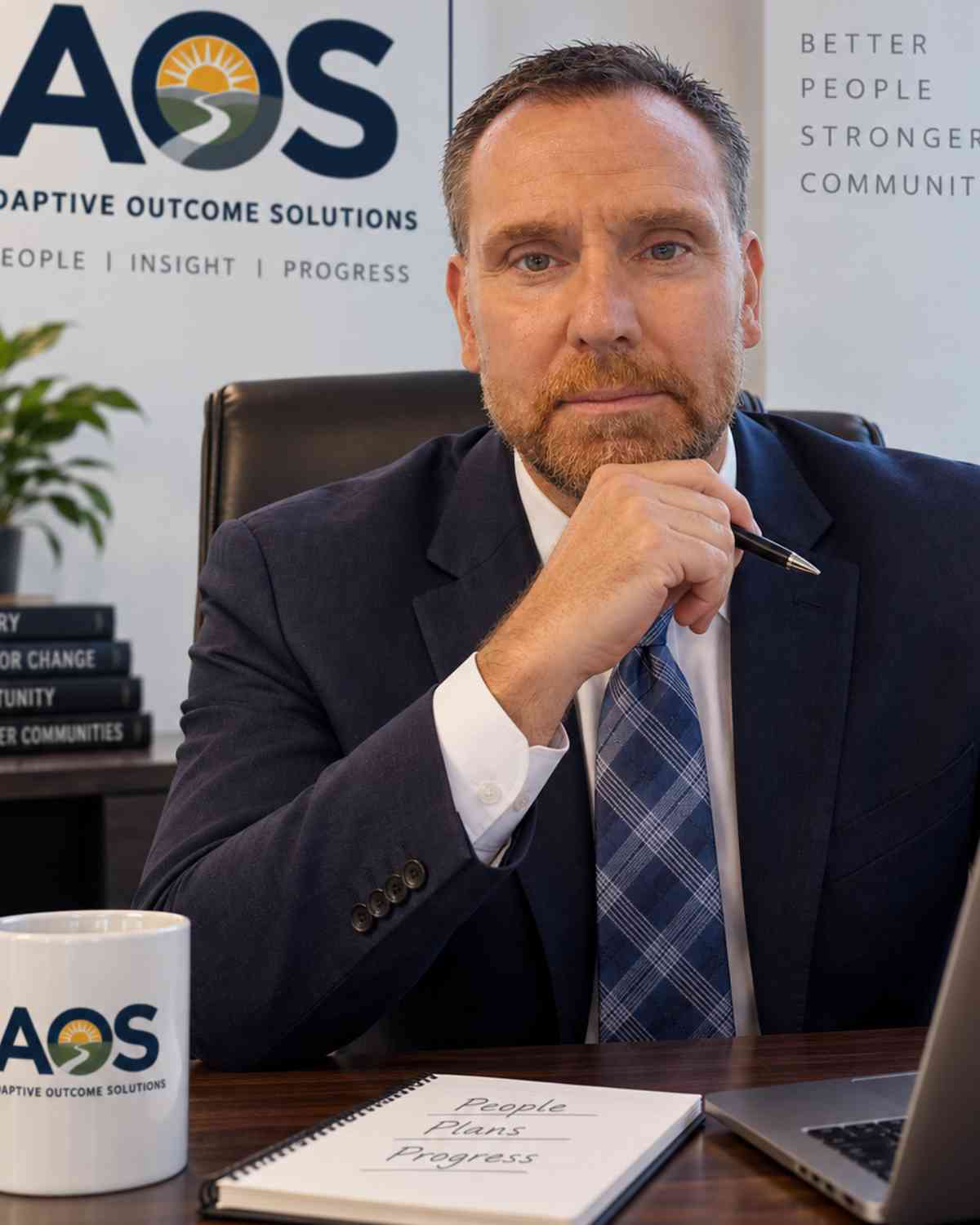
Mark Badilo, Founder of Adaptive Outcome Solutions
Founder • Field-built
Mark Badilo
Justice-system practitioner, program designer, and the reason AOS exists as a practitioner tool first.
Baseline Behavioral Picture • Participant Intelligence

The gap we kept seeing — between services offered, decisions made, and outcomes lived.

Most platforms are excellent at recording that someone showed up. Few help answer why progress stalls when support is present, or why the same pattern reappears after a good week. We built AOS to sit in that exact gap.

We don’t just ask what happened. We look for what keeps happening.
Field note that became a product principle
Field Experience • Assess Good programs, incomplete pictures. Case files captured compliance, but not pressure. Workbooks captured answers, but not learning. Check-ins captured attendance, but not momentum. Practitioners were left to hold the whole story in memory.
Behavioral Patterns Patterns beat points-in-time. One screening score rarely explains a missed shift, a conflict, or a step back. We started mapping recurring decision patterns, regulation dips, strengths, and the environmental pulls that shape them week over week.
Measurement Failure Evidence was lost in the workflow. What was identified, what was tried, how the participant responded, what changed — that thread disappeared between systems. AOS was designed to keep that thread intact without adding paperwork.
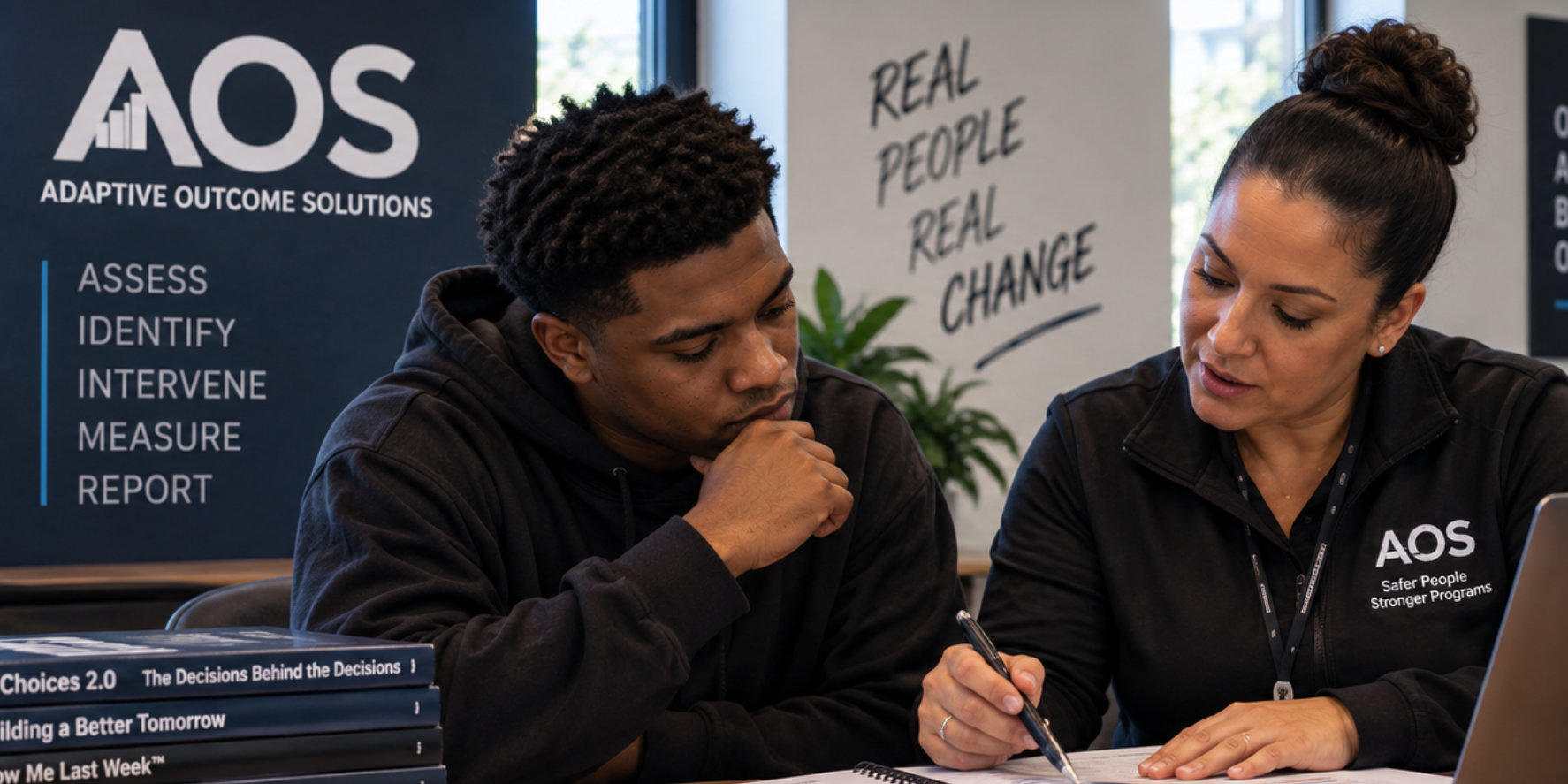
Adaptive Outcome Solutions case planning in use
Field Context Turning case notes into usable intelligence that supports the next decision, not just the last report.
Behavioral Pattern Analysis • What we believe

What we believe

AOS is opinionated on purpose. These are the ideas that shape every assessment, every workbook link, and every longitudinal chart we render.

Identify • Stage 02 Human Judgment First

Technology in support of the practitioner.

No score replaces a conversation. No pattern flag replaces lived experience. AOS organizes behavioral evidence so professional judgment can act faster, with more context and less hunting through systems.

Patterns Over Points

One moment rarely tells the story.

We prioritize longitudinal movement over single-point labels. What’s repeating? What’s stabilizing? What’s under pressure? The most useful intervention starts from pattern, not just intake category.

Evidence In The Work

Capture intelligence while doing the work.

Workbook responses, observations, service delivery, and behavioral checks become evidence automatically. Programs don’t have to pause work to prove work — the system learns as the case moves forward.

How AOS Came Together

The path from field question to connected system.

It didn’t start as software. It started as a set of workbooks and a question practitioners couldn’t shake.

1
Years In The Field

Two decades watching the same gap.

Working across corrections, reentry, diversion, and community programs — seeing high effort, fragmented data, and outcome stories that didn’t add up. The gap wasn’t lack of caring. It was lack of connected behavioral intelligence.
2
The Question That Started It

Why do poor outcomes persist even when opportunity exists?

That single question reframed the work. It moved us from “what services did we offer?” to “what patterns keep producing the same result despite those services?” It became the design prompt for AOS.

3
From Workbooks To Intelligence

Turning static content into living evidence.

We had workbooks that worked. But their answers disappeared after the group ended. We re-engineered them so every response becomes behavioral data — strengths, pressures, inconsistencies — that informs the next case plan.

Select a stage to explore
Connected System In Detail

Assess → Identify → Intervene → Measure → Report

In one thread. Each stage feeds the next, without double-entry. Select a stage above to jump to its detail.

Mark Badilo, Founder of Adaptive Outcome Solutions
20+ YearsField Experience
Built forAccountability
Mark Badilo • Founder, Adaptive Outcome Solutions

Practitioner first. Builder second.

Mark built AOS after years inside the work — not alongside it. From correctional settings to reentry and community supervision, he watched dedicated teams do everything right on paper and still struggle to answer: what actually changed for this participant, and why?

That experience shaped the product. AOS combines justice-system practice, behavioral analysis, and program design. The structured workbooks you see today came from live groups — from listening to how participants explain their decisions when they think no one is scoring them.

The goal was never another dashboard. It was a way to give frontline staff clearer behavioral intelligence, make case planning more targeted, and help leadership report what the work truly accomplished — participant by participant, then at program scale. Professional judgment stays primary. AOS just makes it better informed.

Principles

How we work, and what we optimize for.

Six ideas we return to when we have to make a tradeoff. They keep the product honest.

Principle 01

Clarity Over Complexity

If a practitioner can’t act on it in the next conversation, we haven’t finished the feature. Less jargon. More signal.

Principle 02

Professional Judgment

Algorithms surface patterns; people make decisions. Every AOS output is designed to be challenged, contextualized, and combined with direct observation.

Measure • Behavior Over TimePrinciple 03 • Longitudinal Thinking

Longitudinal Thinking

Change is not an event. We design for weeks and months, not just intake day — so you can see stability forming, not just compliance recorded.

Intervene • Targeted InterventionPrinciple 04 • Practical Intelligence

Practical Intelligence

Insights must be service-mappable. If we flag a barrier, we link it to intervention content, services, and follow-up questions you can use tomorrow.

Principle 05

Accountability

Programs are accountable for what happens next. AOS is built to document the pathway — what was identified, what was delivered, and what shifted as a result.

Principle 06

Respect for the Participant

People are more than risk scores. We highlight strengths, context, and change capacity with the same seriousness we bring to needs and pressures.

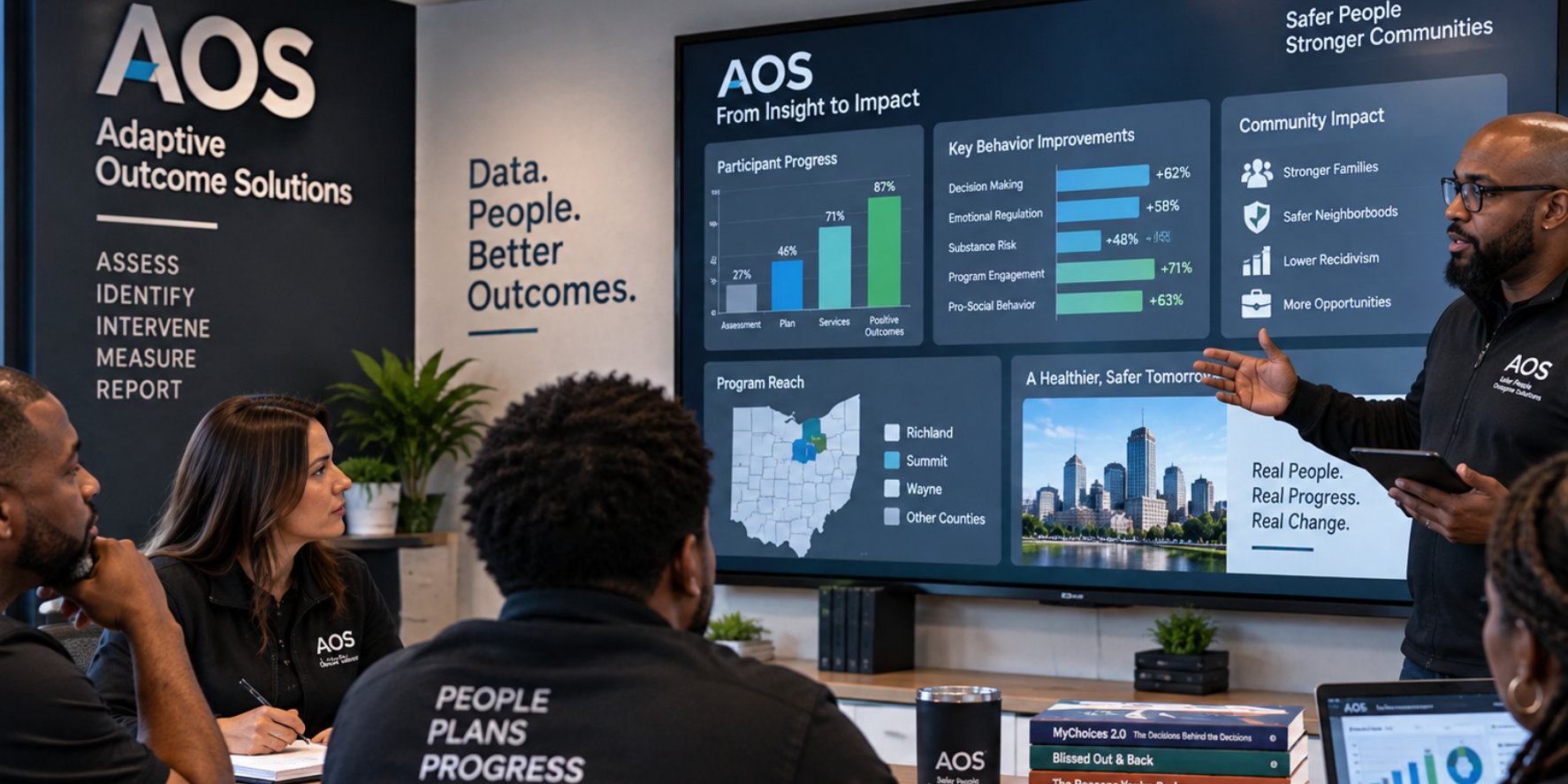
Program leadership reviewing Adaptive Outcome Solutions program intelligence
From Participant To Program One person’s progress, one program’s intelligence — connected without reducing people to a single score.
Evidence • See patterns at scale

Better understanding. Better intervention. Better evidence.

See how Adaptive Outcome Solutions can help your organization connect participant assessment, case planning, structured intervention, progress measurement, and program reporting — in one field-built system.