
Behavioral intelligence should not stop at intake. It should grow with the participant.
Adaptive Outcome Solutions connects structured assessment, behavioral pattern analysis, targeted intervention, ongoing measurement, practitioner observations, and real-world outcomes into one evolving participant record.
One connected behavioral intelligence system
From baseline assessment to longitudinal intelligence.
AOS follows one connected pathway. Each new source of information adds to the participant's behavioral picture instead of replacing what came before.
Assess
Establish a behavioral baseline using participant history, current circumstances, decision patterns, strengths, pressures, needs, and stability factors.
Identify
Organize related information into behavioral patterns, strengths, inconsistencies, pressures, barriers, and case-planning priorities that may deserve closer review.
Intervene
Connect identified needs to appropriate services, referrals, structured workbooks, coaching, programming, and practitioner-guided case planning.
Measure
Add workbook responses, weekly behavior, practitioner observations, engagement, services, and real-world outcomes to the participant record over time.
Report
Convert growing participant evidence into clear practitioner intelligence and aggregate program-level information about engagement, services, behavioral movement, and outcomes.
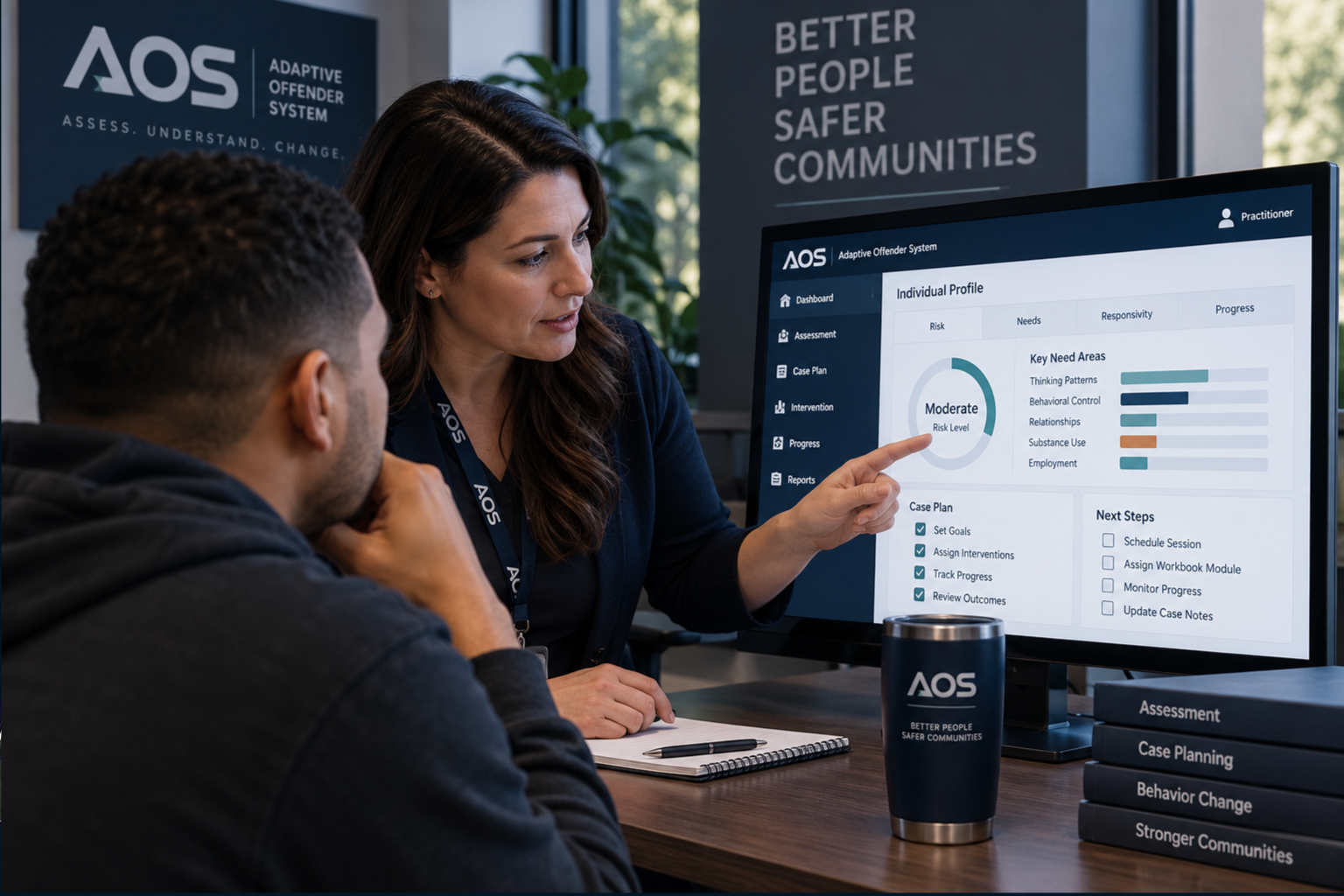
What the system actually connects.
AOS does not treat one answer as definitive. It connects multiple sources of evidence so practitioners can see where findings reinforce each other, where they conflict, and where more information may be needed.
Response Consistency
Looks for contradictions, unusual response patterns, missing logic, and areas that may require practitioner follow-up.
Behavioral Intelligence
Identifies recurring patterns, pressures, strengths, decision tendencies, and possible barriers across multiple evidence sources.
Case-Planning Priorities
Highlights practical concerns, strengths, service needs, stability issues, intervention targets, and questions that may deserve closer attention.
Program Intelligence
Examines aggregate patterns across participants to help programs understand engagement, services, intervention activity, behavioral movement, and outcomes.
Built to support, not replace.
Adaptive Outcome Solutions is designed to supplement professional judgment. Assessment findings should be considered alongside practitioner experience, direct observation, participant history, collateral information, and other appropriate assessment information.
One system. Three levels of practical intelligence.
AOS is designed to make participant information useful to the frontline practitioner while also helping program leadership understand what the organization is accomplishing.
Participant Intelligence
Creates an evolving behavioral picture from assessment, intervention responses, ongoing behavior, practitioner observations, services, and outcomes.
Practitioner Intelligence
Converts complex participant information into clear priorities, questions, intervention targets, and case-planning support.
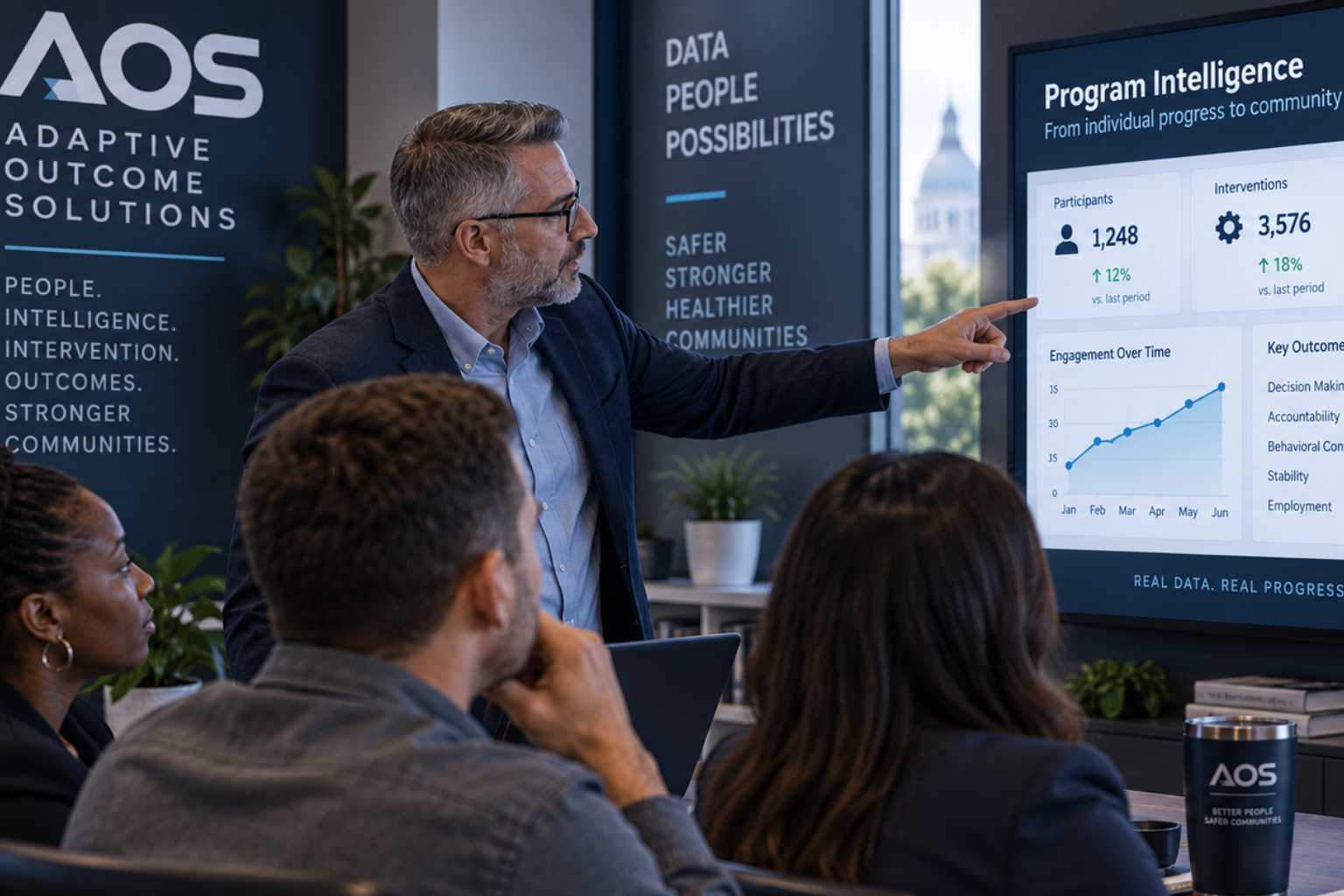
Program Intelligence
Aggregates participant-level evidence so organizations can examine engagement, service delivery, behavioral movement, and measurable outcomes.
Free Pilot Opportunity
Use a limited pilot to see how AOS fits your actual workflow. Select participant cases, review the outputs with staff who know those participants, and decide whether a larger implementation is warranted.
Select Cases
Choose a limited number of appropriate participant cases for pilot review.
Review Intelligence
AOS produces structured behavioral intelligence, case-planning indicators, and practitioner-facing outputs.
Evaluate Usefulness
Your team evaluates usability, perceived concordance with participant knowledge, practical usefulness, and case-planning value.
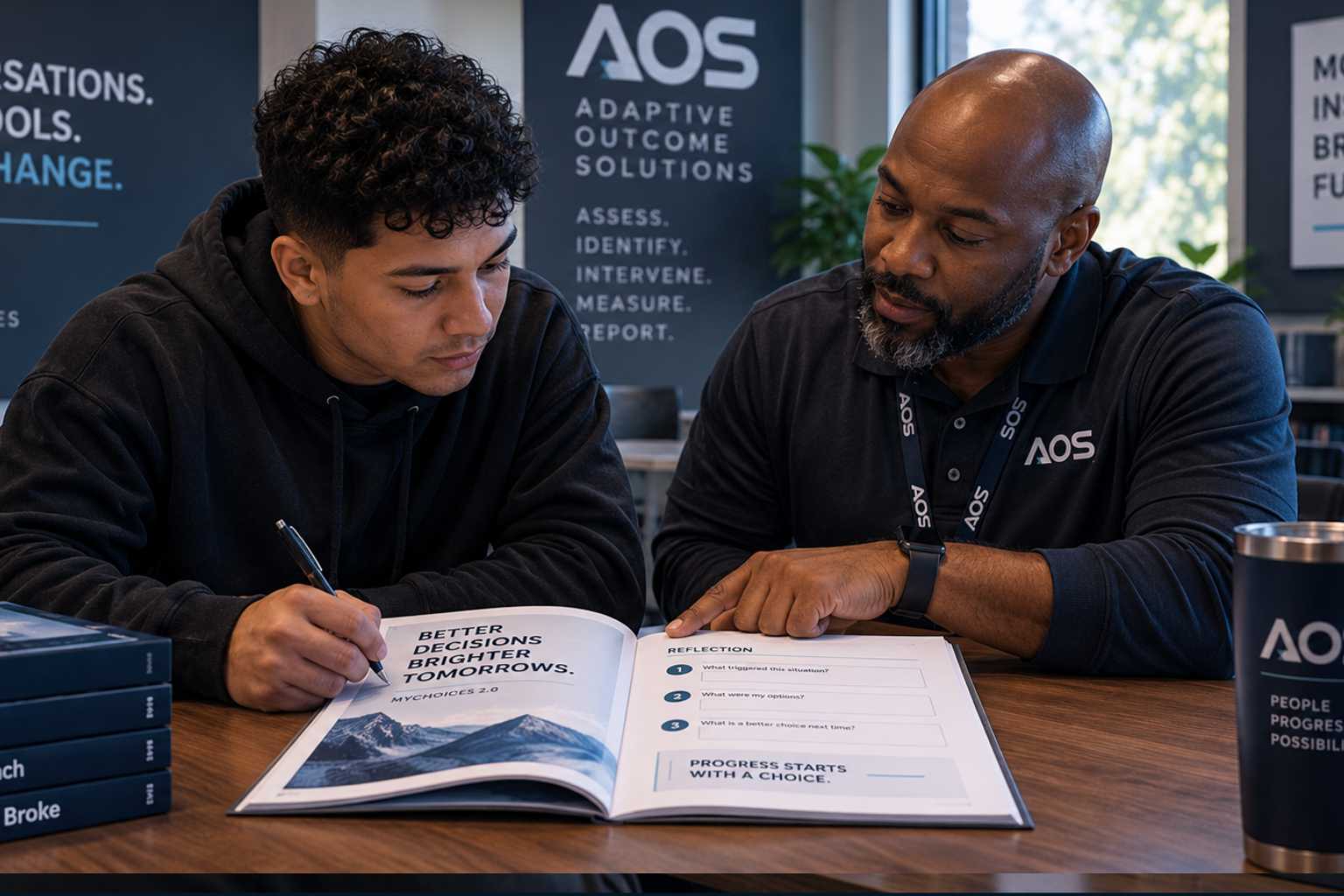
Structured intervention becomes part of the evidence.
AOS workbooks are not intended to sit outside the intelligence system. Participant responses can become additional behavioral evidence tied to the intervention, the behavioral area being addressed, and the participant's longitudinal record.

Better understanding. Better intervention. Better evidence.
Adaptive Outcome Solutions helps organizations connect participant assessment, case planning, structured intervention, ongoing behavioral measurement, practitioner observations, and program reporting.